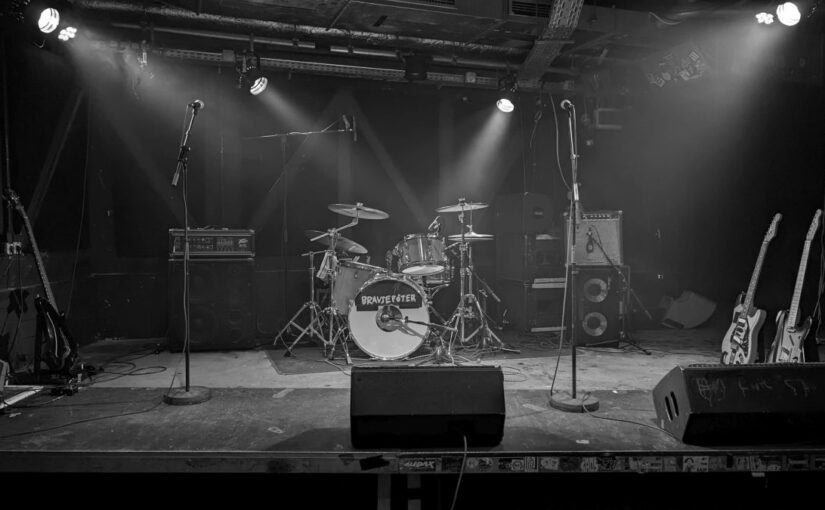
Plenty of me mates took a jog down memory lane on Wednesday at the Monkeys, cheering towards Cheetah Chrome & his Dead Boys. Whilst i definitely uphold the Dead Boys original vinyl output (two great LP’s, a couple of singles) it was the live videos i saw of this 2024 version that did turn me down. Big time actually. So i did let go, though later friends where full of praise of “great 1970s NY rock” … ok, choices – as ever.
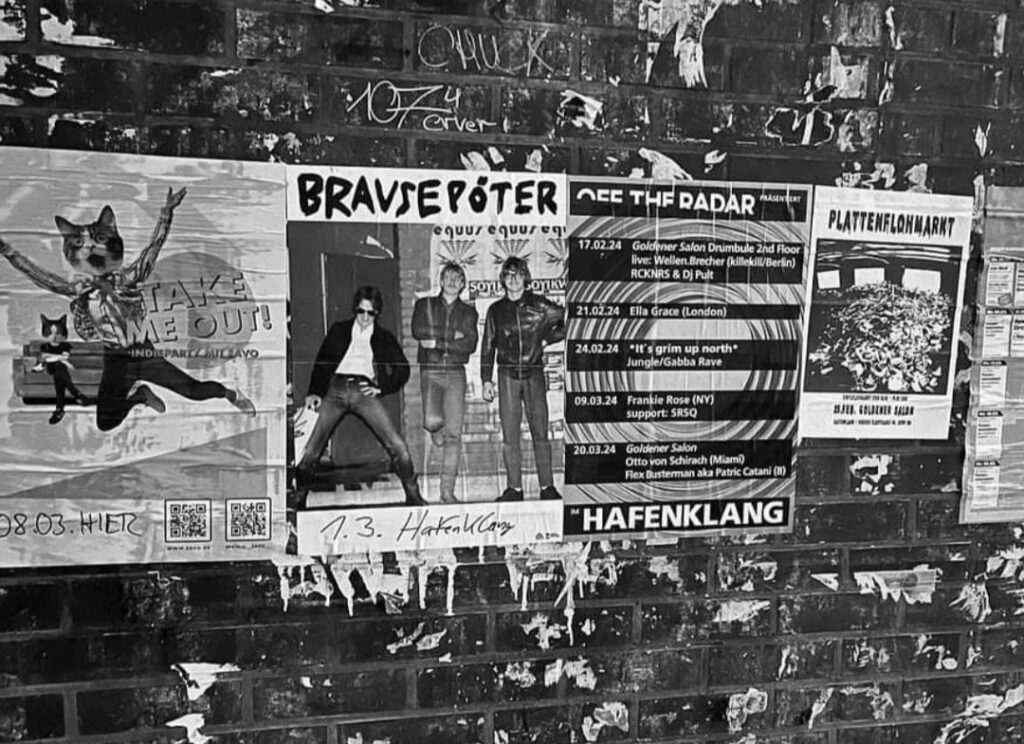
Another choice for a jog down memory lane was Brausepöter at the Hafenklang. And in contrast to them Dead Boys their original recorded output (one 7″ on Zick Zack in 1980) is simply shite.
Also by the account of the band, as Zick Zack head honcho Alfred Hilsberg dragged them out of the Scala aka “New Scala Wave” in Herford straight into a studio in Hamburg manned with a bearded Jazz Hippie. And the output was poor, forgettable.
That Brausepöter still have a name in Hamburg (whilst having only ever played two shows here, 1980 and 2014) is down to this show:
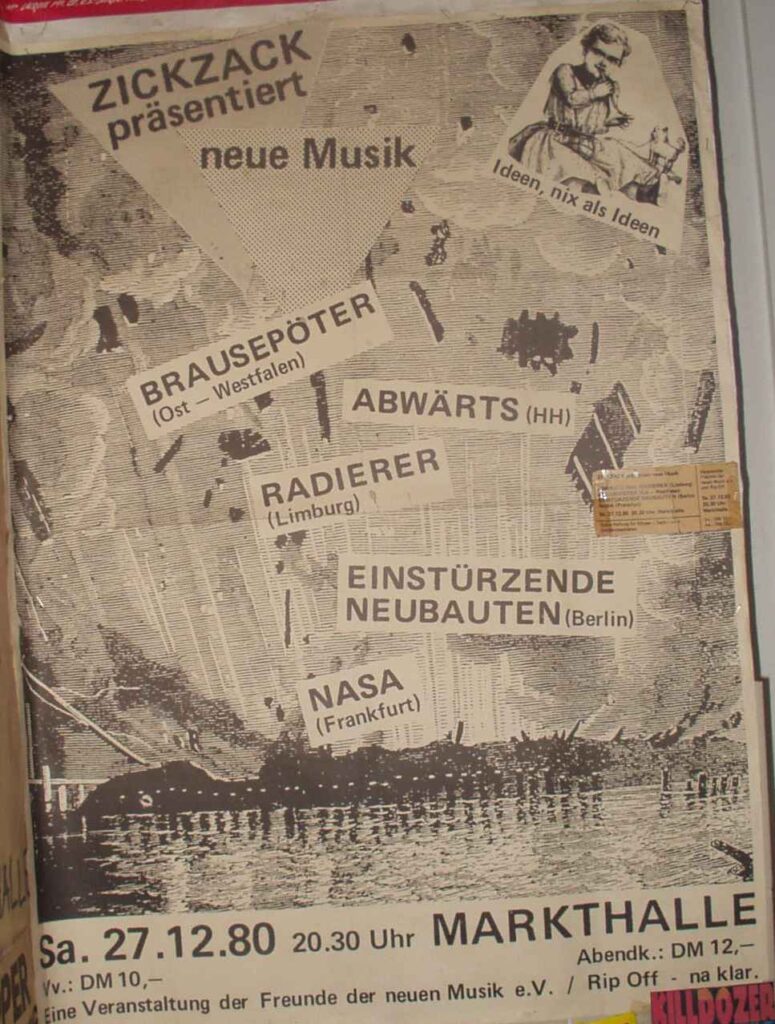
It was maybe the one show where the Hamburg Pogo Punk contingent and the Neue Musik lovers (soon to be Neue Deutsche Welle and hated) did split apart. Previous Festivals at the Markthalle (forever put to memory by Robert Nitz on Konnekschen) did keep a unity between the two – as late in 1980 the split seemed unavoidable.
Brausepöter guitar player Martin memorized it like this:
Q: Alfred Hilsberg also organized the legendary Zick-Zack festivals in Markthalle (Hamburg), where you also performed. When was that?

A: That was in late December 1980. We played together with Radierer, the partner combo of The Wirtschaftswunder, they both come from Limburg. And Abwärts plus Einstürzende Neubauten.

Q: The mood is said to have been explosive, as you can read in Jürgen Teipel's book “Verschwende Deine Jugend”. What was going on with you?

A: So for us it was like this: Abwärts was the only band that was accepted by the audience. But they only came at the end. Although, that's not entirely true: Einstützende Neubauten continued to play afterwards. It was their first appearance outside of Berlin. The whole Markthalle was almost empty by then. There were only 30 people left and I was standing in the middle. It was like a moon landing that you just happened to be there for. I had never seen anything like that: the way they banged around on their instruments, with that archaic industrial sound, unbelievable.

Q: And how was Brausepöter received?

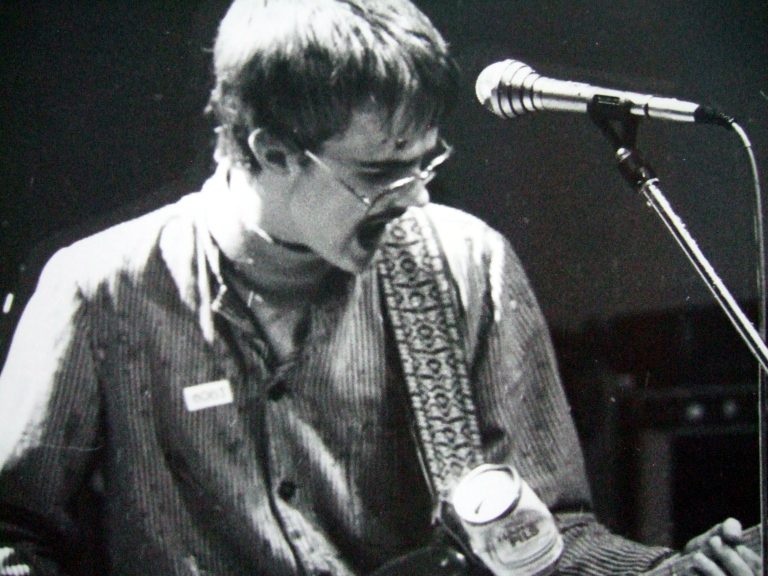
A: As I said: Abwärts were accepted. Otherwise the festival was not well received by the audience. The Hamburg punks were also strongly influenced by the British scene; It was very rough there. I don't remember whether they booted Die Radierer off the stage. I believe yes. In any case, we remained adamant. I told them: “Do what you want, we’ll play through our set here”. And maybe they spit on us, you wouldn't believe that. I was wet! From top to bottom. And then there is also a photo of me getting a full beer can in front of my head. I bled like anything else. “Keiner Kann Uns Ab” in its purest form.
And indeed the moment where the Hansa Pils can (cheapest piss back then and often used as a messenger) did meet Martin was memorized on a picture:
Their “signature” song “Keiner Kann Uns Ab” (roughly “No one digs/likes us“) from that night with some pointed pictures is out out there too:
Memory lane, ctd.
With all of that in mind i had made the conscious decision to see them rather than the Dead Boys: Whilst the Dead Boys could destroy a good memory, Brausepöter could not. Also because i wasn’t at that night, though the three mates that would accompany me down to the Hafenklang were. And had no recollection of Brausepöter (other than the cool name).
They are back together (after their breakup 1982) since 2008 and found fame even in the US of A with some old stuff put out there in 2010 to much acclaim:
A wild slice of punk scabbery with a vibe of what a male Kleenex fresh out of the Beat Club might resemble (Brian Turner, Music Director of WFMU-Radio, New York, commenting on the US "Bundeswehr" & "Keiner kann uns ab" 7" release)
They played the Astra Stube in 2014 (to no acclaim) and now tour again as Hamburgs Tapete Records decided to release the planned LP that Alfred Hilsberg never released.
The show was moved from early Jan 24 due to a sickness within the band and on this Friday, down in the big room of the Hafenklang, only ever attracted roughly 50something people. Half of them old and funnily half of them rather of younger age.
They kicked off without support and i guess some newer songs: Well played and modern guitar music, with German lyrics. And the guitar was to be their main asset, a great sound that was above the average twang (of many of these modern German guitar bands).
Brausepöter (Hafenklang, Hamburg, 01.03.2024 (c) gehkacken.de 2024
It was paired with dual singing and varied in tempo, drive and – frank – quality. But over time (they played for almost 1h30m including a some extra songs) it all moved over to the pleasant side.
Here is “Keiner Kann Uns Ab” in the 2024 version:
Cool stuff, well received (up to and including some fans singing along to almost all songs). Between songs they chatted a bit and where surprised that a couple of folks (me mates plus one more) had been at the Markthalle back then. On top they also inquired if Alfred Hilsberg is still around (which he is, but not at good health according to one in the know).
Brausepöter (Hafenklang, Hamburg, 01.03.2024 (c) gehkacken.de 2024
Frank, i did not expect that i would actually appreciate their set, but it was really neat and at the end had plenty of applause from the small audience. On top they where humble, approachable and thankful for having an audience and having a chat.
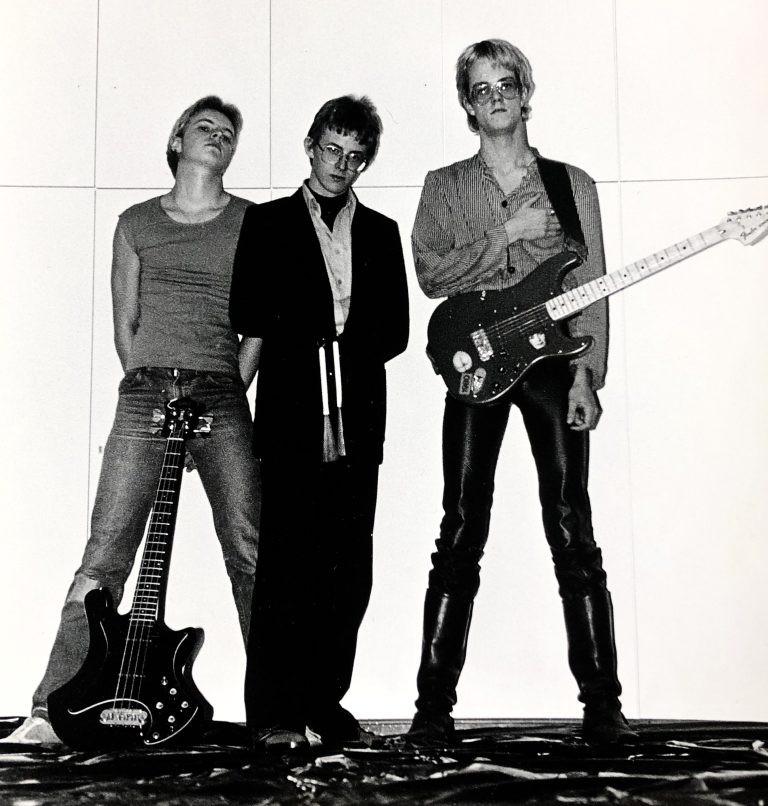
And because the contrast is so nice – here is a picture how they looked all stylish (according to the understanding of style in Riedberg, Ostwestfalen, in 1979).
This is where they come from, their practice place (back then? obviously now) and one of their new songs:
Memory lane, on all counts.
I guess they did not fit back then and nowadays sure seem to give a damn fuck about fitting anyway – they do music for the the music itself (and continued in their own understanding of style). Not my favorite style but still good to enjoy live.
For me and me mates a perfect #thereaintnuthinbetterthanlivemusic and at my perfect place.